
The Cat's Pajamas · Look inside
Chapter 2: Sitting Pretty
Use the arrows or your keyboard to turn the pages.
Chapter 2
Sitting Pretty
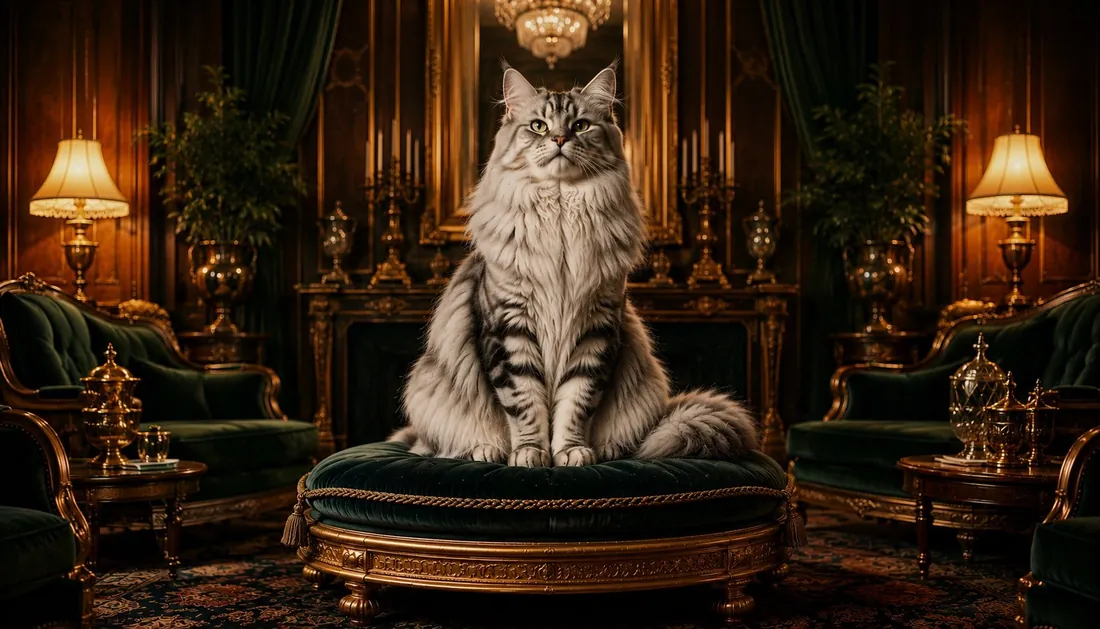
Status, advantage, and the satisfaction of winning
No animal does winning quite like a cat. A dog that wins wags, barks, tells the whole street. A cat that wins simply settles deeper into the best chair and lets you work out, in your own time, that it has beaten you.
This chapter is about that quiet supremacy: the high perch, the full bowl, the smug little smile that says the game was over before you knew it had started. The cat did not need to gloat. It had already won, and gloating would have been beneath it. These are the words we coined for the feeling, and for the rare, infuriating creature that wears it best.
Top Cat
The one at the top, and everyone knows it
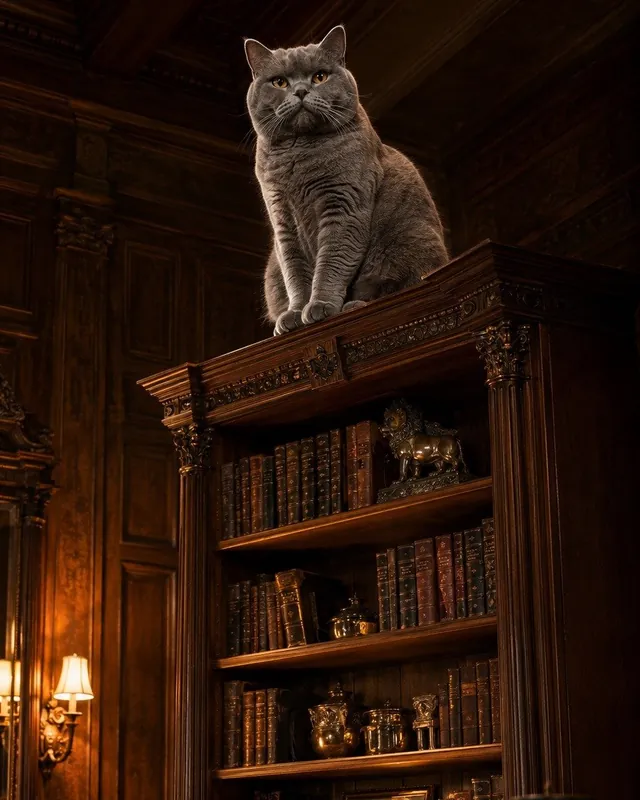
Every group has one, and everyone in the group knows exactly who it is. The top cat does not campaign for the position or announce it. It simply occupies the best spot, the warmest chair, the highest shelf, and lets the arrangement speak for itself.
The phrase is the feline answer to top dog, and the difference between the two tells you everything. The top dog earned its name in the brutal world of the sawpit, where the dog standing above did the easier work while the one below was showered in sawdust. It is a phrase about labor and struggle. Top cat skips all that. The top cat is simply, serenely, in charge, and was never observed doing anything to get there.
This matches the animal precisely. Cats do keep loose hierarchies, and the senior cat claims the prime territory: the sunniest windowsill, the vantage point over the door, the lap of the person who matters. Lower ranks wait their turn. The occasional young pretender tries the arrangement, and learns within a single afternoon precisely where it stands. None of it is decided by a fight if a fight can possibly be avoided. It is decided by sheer, unbluffable confidence.
That is the real lesson of the top cat. Authority, properly worn, never raises its voice. It does not need to win the argument. It simply takes the best seat, holds your gaze, and waits for you to remember your place.
21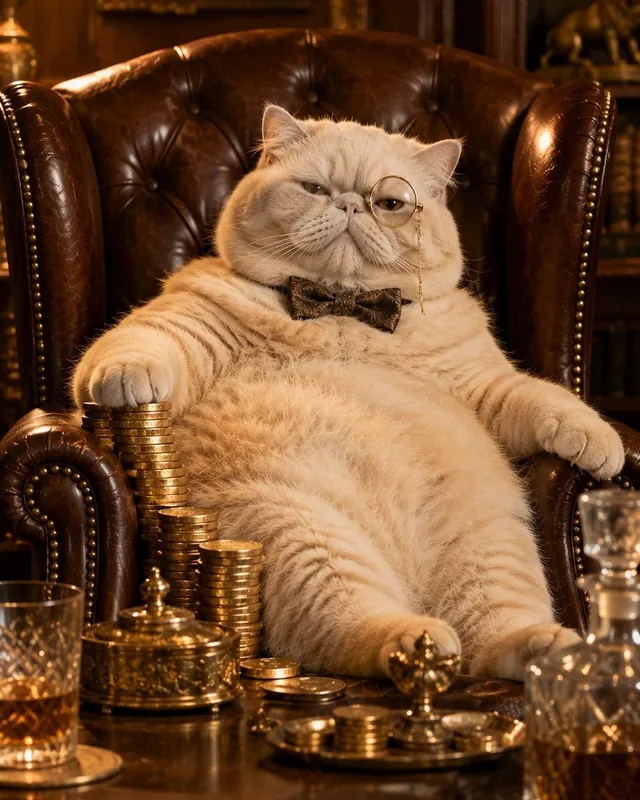
Fat Cat
Rich, comfortable, and faintly insufferable
Not every cat compliment is entirely a compliment. To call someone a fat cat is to grant them wealth and power while quietly resenting both, and the cat is the perfect vehicle for that double-edged feeling.
The phrase is younger than it sounds. It was coined in 1920s American politics, where a fat cat meant a rich backer who bankrolled a campaign and expected a return on the investment. The journalist who popularised it had in mind exactly the picture the words conjure: a sleek, overfed creature, comfortable to the point of complacency, grown plump on a system arranged for its benefit.
What makes it stick is the image, not the politics. We all know the look. The fat cat is not merely rich. It is rich and settled, reclined in the best chair with the smug certainty that the world will keep arriving on a tray. There is no hunger left in it, and a little of our admiration curdles into something sourer at the sight.
The cat, naturally, feels none of this. A well-fed cat experiences its own comfort as simple justice, the natural order finally getting things right. It does not notice the resentment in the room, and would not care if it did.
Which is, in the end, the most fat-cat thing about it. True comfort never apologizes and never explains. It stretches, yawns, and goes back to sleep on the warm pile of everything it has.
23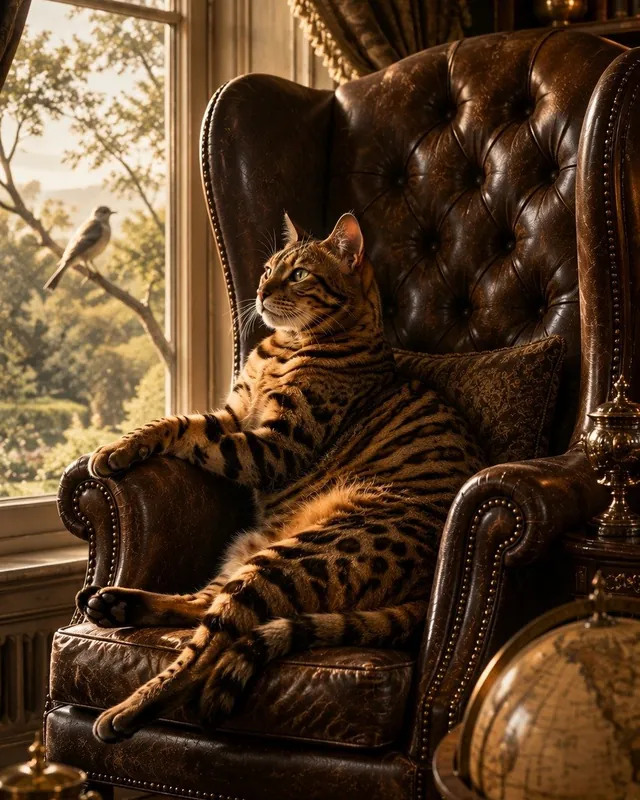
Catbird Seat
The position everyone else wishes they had
Here is the odd one out, the cat idiom with no cat in it at all. The catbird is a bird, a gray North American mimic that borrows other birds' songs and, now and then, produces a thin complaining mew that sounds uncannily like a cat. It was named for the sound, and it likes to deliver it from the highest, most exposed perch it can find.
To be in the catbird seat is to be in that perch: up top, in the clear, with the whole field in view and every advantage in hand. The phrase belongs to American sport, made famous by a baseball broadcaster who used it for a batter sitting on three balls and no strikes, free to swing or wait, holding all the power in the exchange. A short story then borrowed it for a mild office clerk who quietly turns the tables on his tormentor, and the expression was sealed into the language. The batter and the clerk shared one thing: the deep calm of holding every card.
It earns its place in a book of cats because the feeling is so thoroughly feline. Find any cat in any room and it will already have located the catbird seat: the top of the bookcase, the back of the tallest chair, the sill with the longest view. From up there it misses nothing and answers to no one.
The bird only sings about the best seat. The cat simply takes it.
25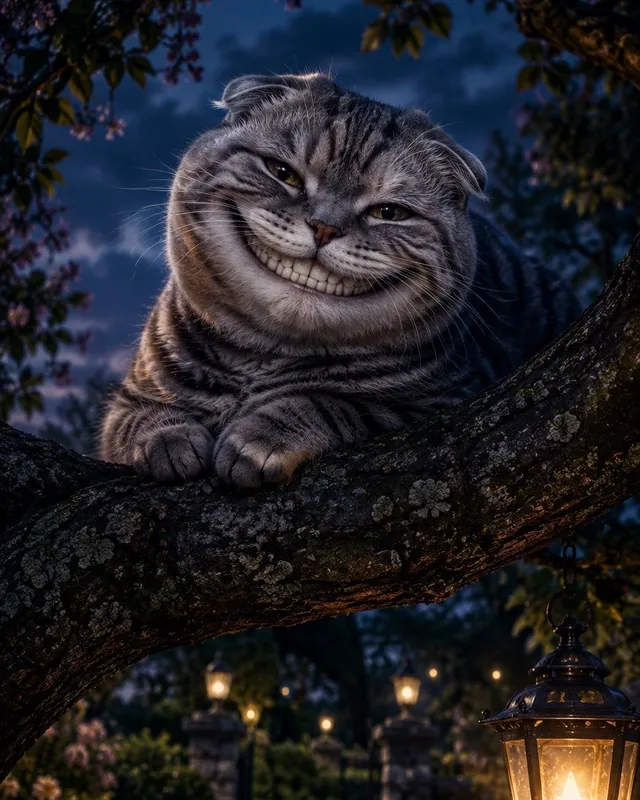
Grin Like a Cheshire Cat
The smile that outlasts its own cause
To grin like a Cheshire cat is to wear a wide, fixed, knowing smile that gives nothing away and somehow says everything. It is the smile of a creature enjoying a private joke at your expense, and declining to share it.
Lewis Carroll gets the credit, but he did not invent the phrase. It was already common in England long before Alice met the vanishing cat on the branch. Where it came from is gloriously uncertain. One story claims Cheshire cheeses were once moulded in the shape of a contented grinning cat, eaten, fittingly, from the tail end forward. Another blames a county sign-painter whose attempts at fierce heraldic lions came out looking like cheerful tabbies. Either way, Cheshire and grinning cats were paired in the public mind, and Carroll, a Cheshire man himself, simply made the pairing immortal.
What he added was the unsettling part. His cat fades away by degrees until only the grin is left, hanging in the air with no face behind it. That detail is why the phrase still has teeth. A Cheshire grin is not warmth. It is satisfaction without explanation, pleasure that has detached itself from any visible reason and floats there, serene and faintly maddening.
Cats, of course, do not actually smile. The expression we read as a grin is an accident of anatomy and our own hopeful projection. Which only makes it worse. The cat is not smiling at all, and is still, unmistakably, winning.
27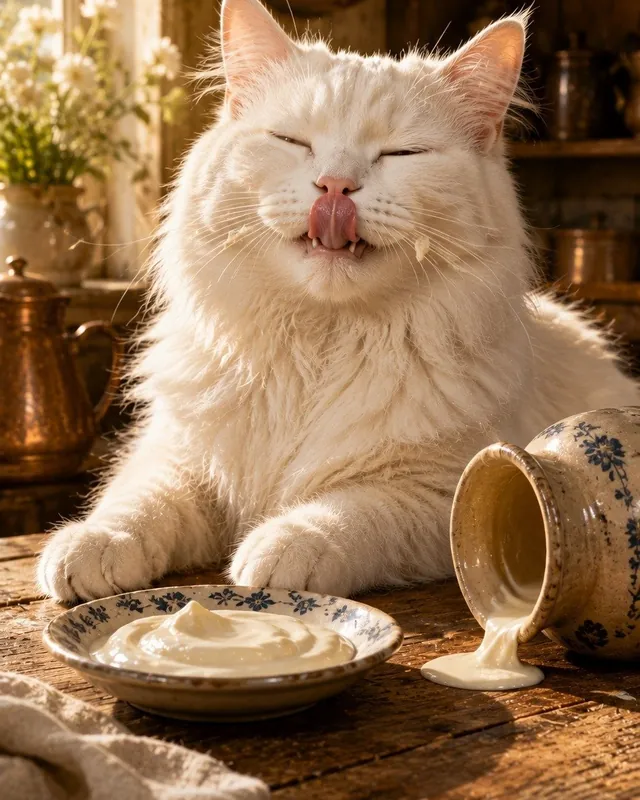
Cat Got the Cream
Pleasure as pure as it is shameless
Some satisfaction is innocent, or nearly so. The cat that got the cream has done nothing truly wrong. It has simply ended up, through luck or low cunning, with the very best of what was going, and it is not about to pretend otherwise.
The phrase comes from the days when milk arrived in bottles and the richest cream rose to the top, a thick golden layer that was the connoisseur's prize and, more often, the cat's. A cat that reached the cream first wore an expression every owner knows: eyes half closed, whiskers faintly greased, the whole face arranged into a picture of deep and total contentment. To look like the cat that got the cream is to look like that. Pleased to the bones, and quietly certain you deserve it.
What separates this from mere happiness is the smugness. The cat is not only satisfied. It is satisfied at having come out ahead, at having got the good thing while others got the ordinary milk beneath. There is a winner's gloss to it, a soft private triumph.
And the cat feels not a flicker of guilt, because in its own accounting there is nothing to feel guilty about. The cream was there. It was reachable. The matter resolved itself in the only sensible way, which is to say, entirely in the cat's favor. A cat with cream on its whiskers has no notion of having taken anything. It has merely received its due.
29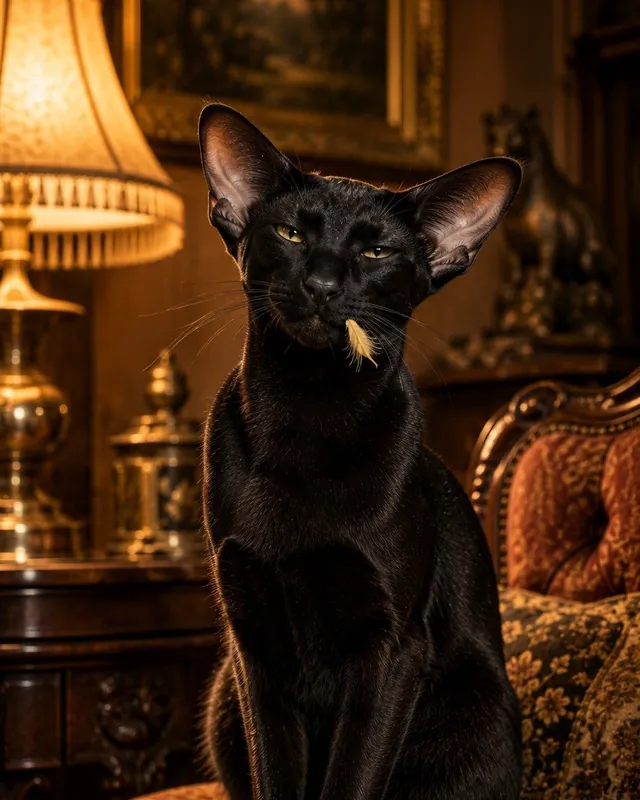
Cat That Ate the Canary
Triumph with a tell-tale feather
This is the cream's wicked cousin. The cat that ate the canary wears the same blissful, self-satisfied expression, but with one crucial difference. There was a victim, and everyone suspects it.
The image is exact and slightly horrible. A cat sits purring, demure, the very portrait of innocence, and clinging to its lip is a single small yellow feather. The crime is done, the satisfaction is total, and the evidence is right there for anyone who cares to look. To wear the look of the cat that ate the canary is to be caught mid-gloat, radiating a contentment so complete that it gives the whole game away.
What the phrase captures so well is the failure of the cover-up. The guilty party is trying, sincerely, to look as though nothing has happened. But the smugness leaks. The triumph is too large to hide behind a casual face, and the harder the effort to seem ordinary, the louder the feather speaks.
There is something gloriously honest about it. The cat is not really ashamed, only theatrically discreet, performing an innocence that fools nobody and is not meant to. The pleasure of getting away with it is precisely the pleasure of being almost, but not quite, found out.
We have all met the human version across a meeting table, wearing a face of bland calm while a small yellow feather trembles at the corner of the mouth. We forgive it, mostly, because we have worn the feather ourselves.
31Cat idiom mugs and tees
Cat sayings on mugs and tees.
 Crazy Cat Lady
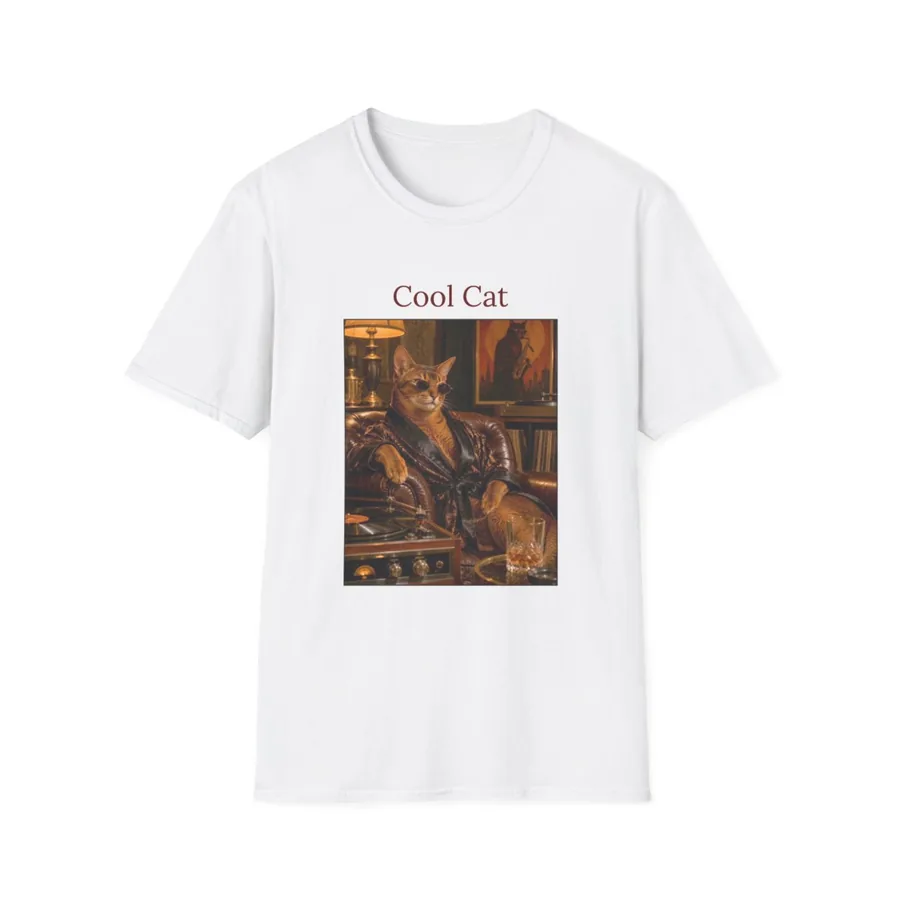 Cool Cat
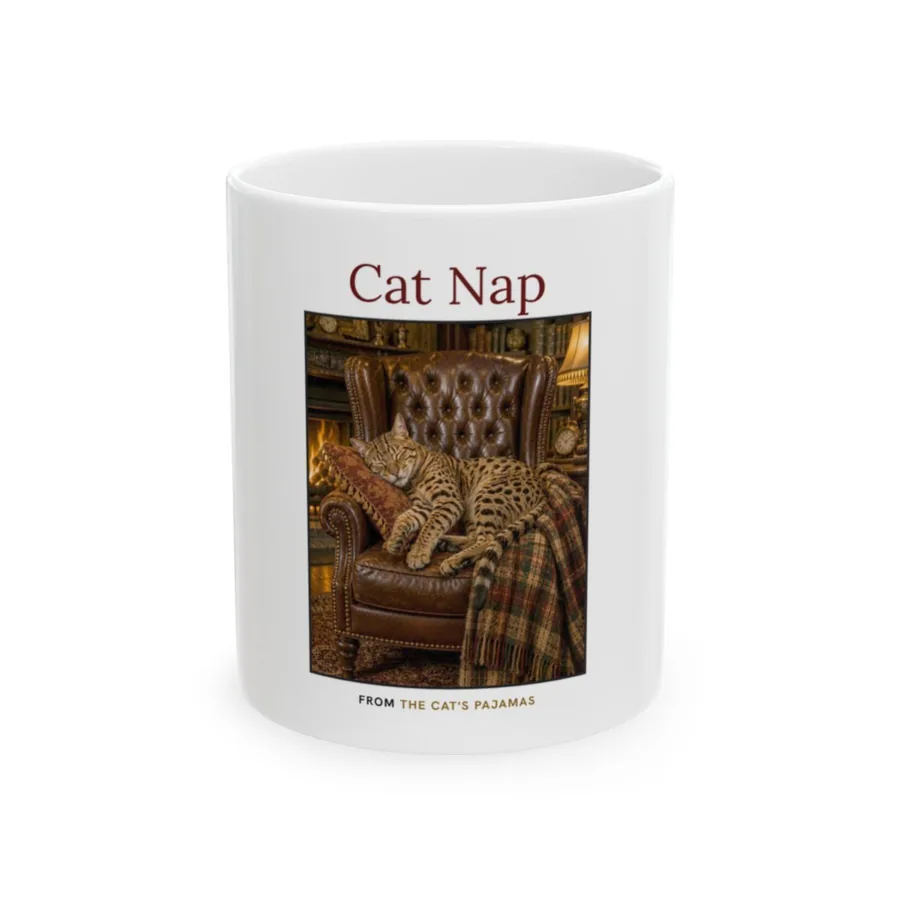 Cat Nap
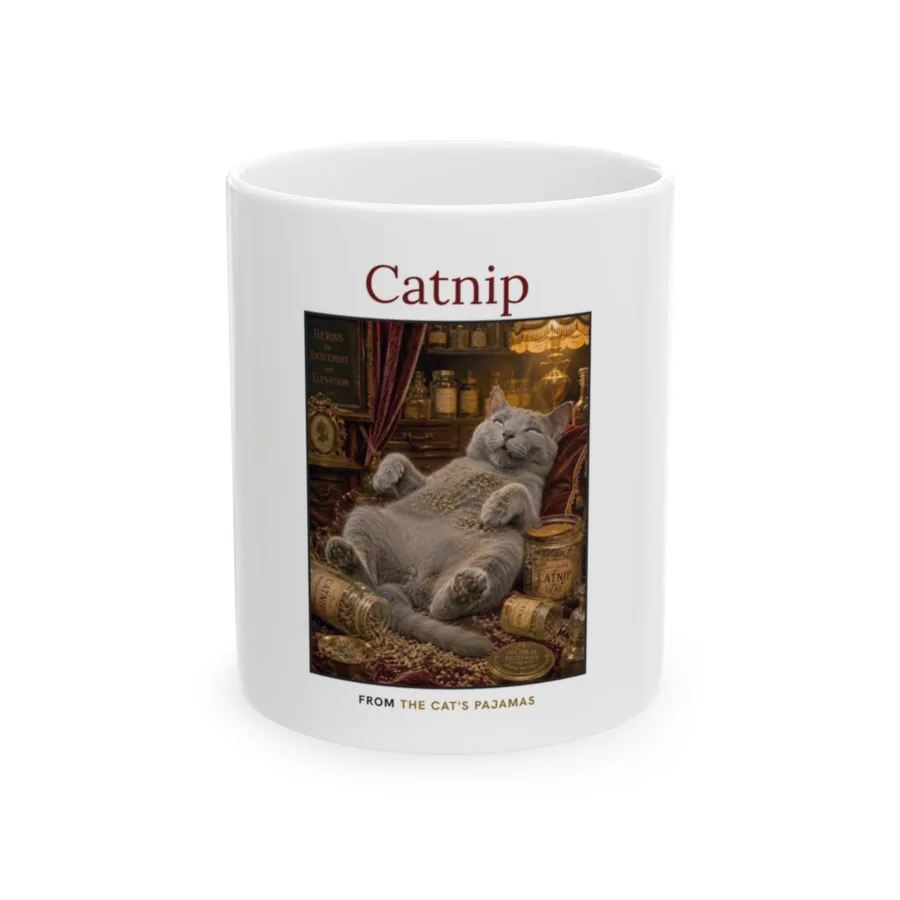 Catnip
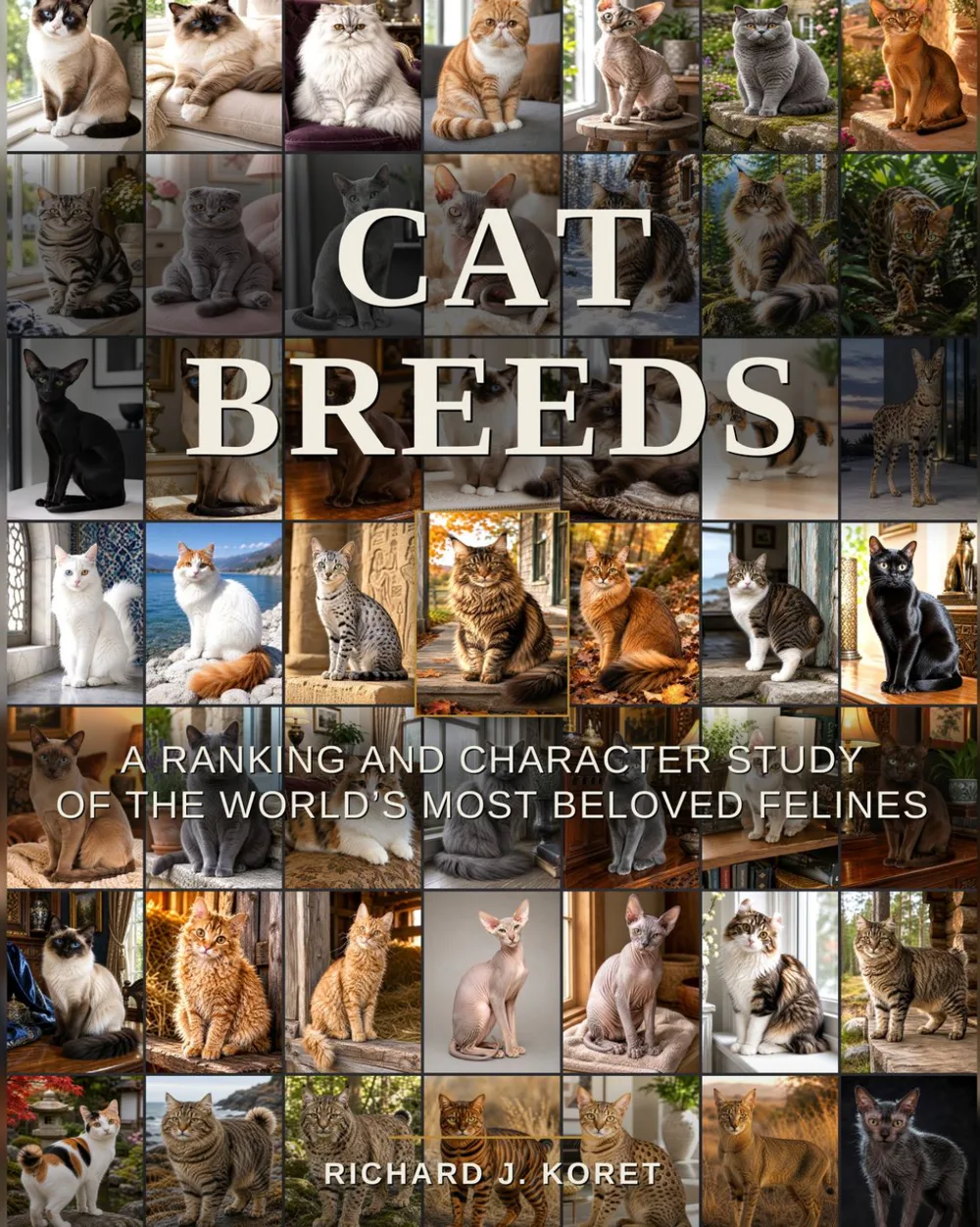 Cat Breeds
 Dog Breeds
 Every Dog Has His Day
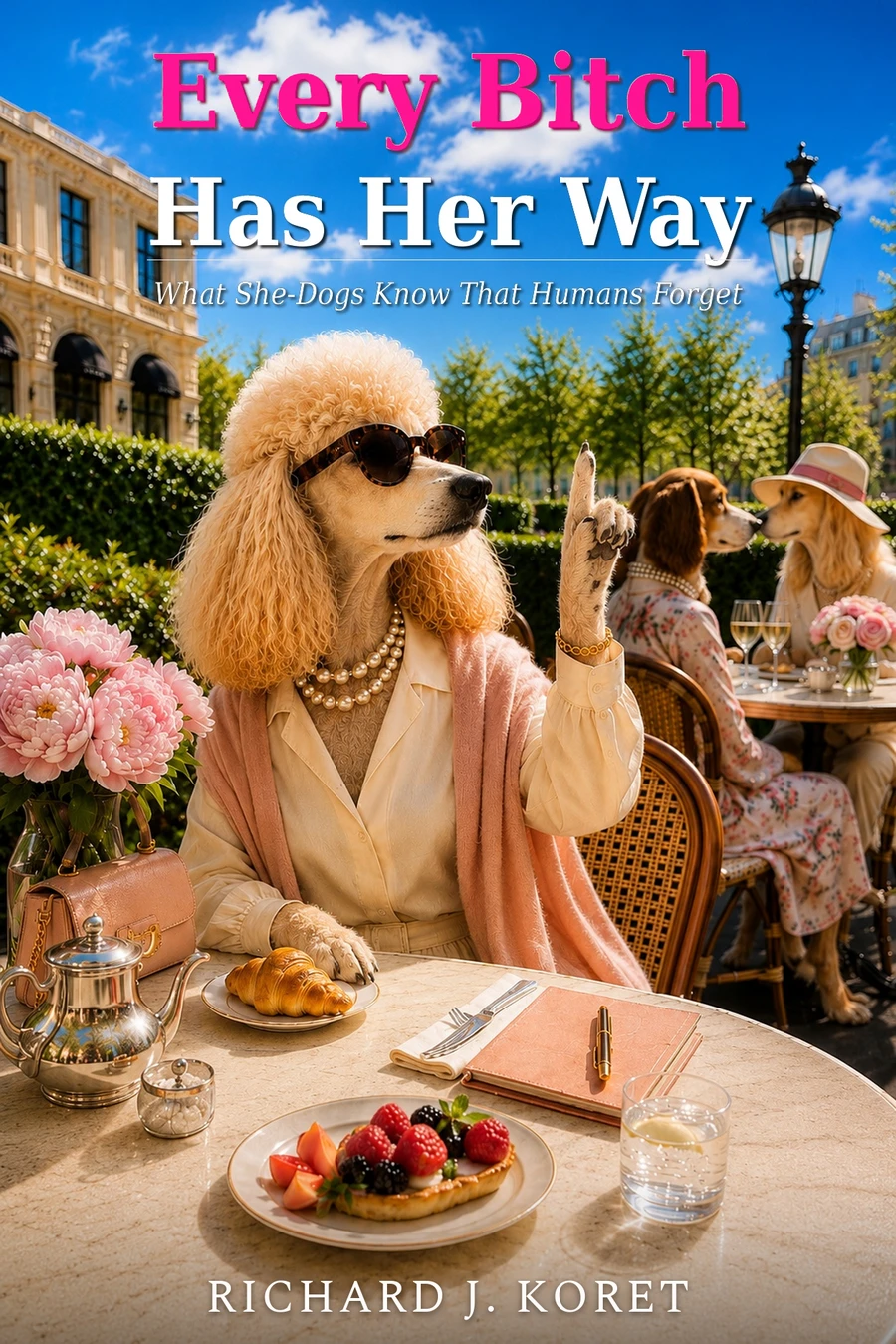 Every Bitch Has Her Way