
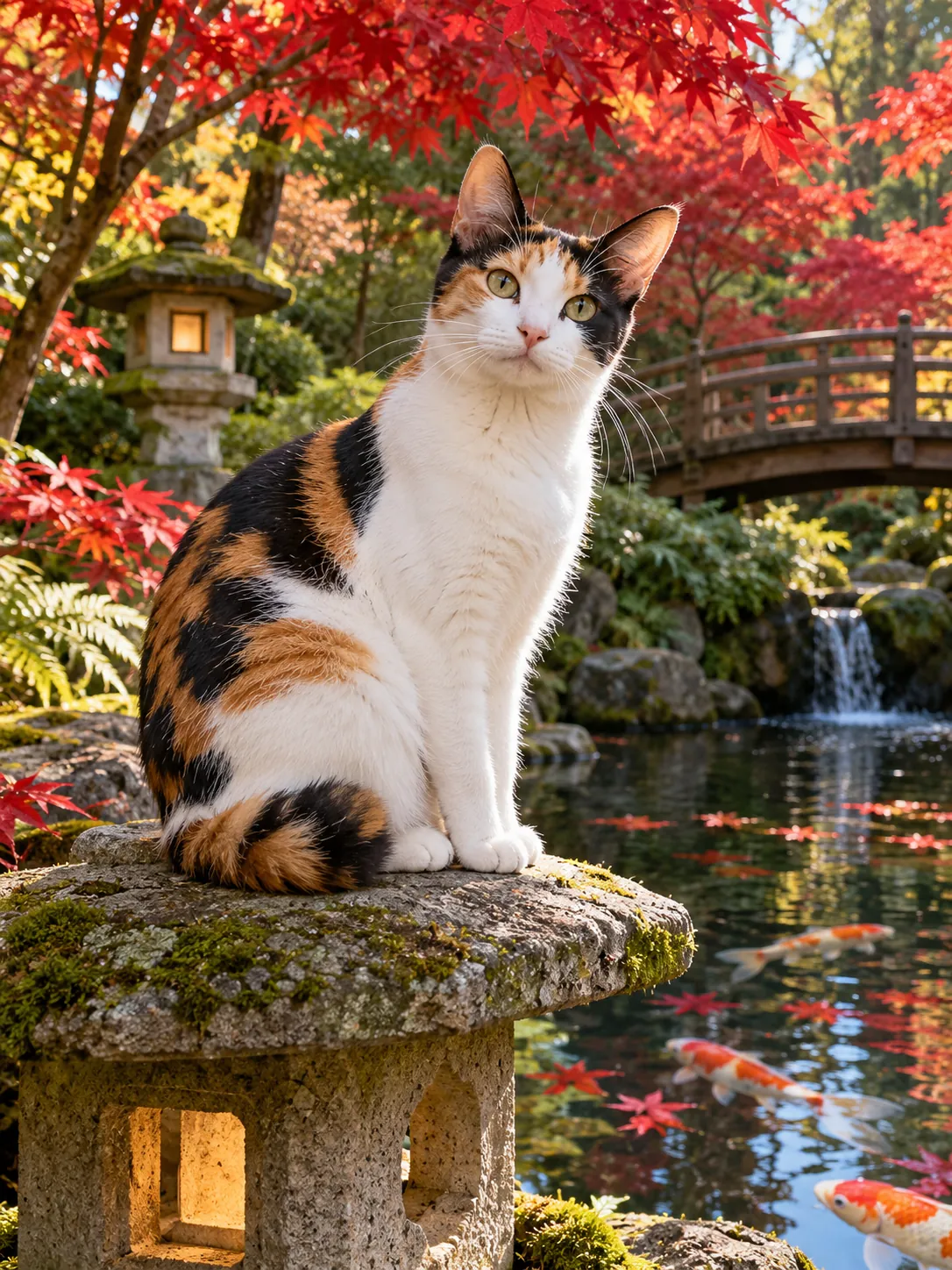
The Japanese Bobtail is an ancient breed of Japan, with a history of several centuries. Short-tailed cats appear in Japanese art and folklore, and the beckoning cat, Maneki-neko, a figure that waves a raised paw to bring good luck, is often shown as a calico Bobtail. The breed reached the United States in 1968 through the importer Elizabeth Freret.
The tail is the signature. It is short and curved, with the hair fanning out in a pom-pom, like a rabbit’s tail, and each cat’s tail is unique, like a fingerprint. The gene is recessive and unrelated to the Manx or American Bobtail.
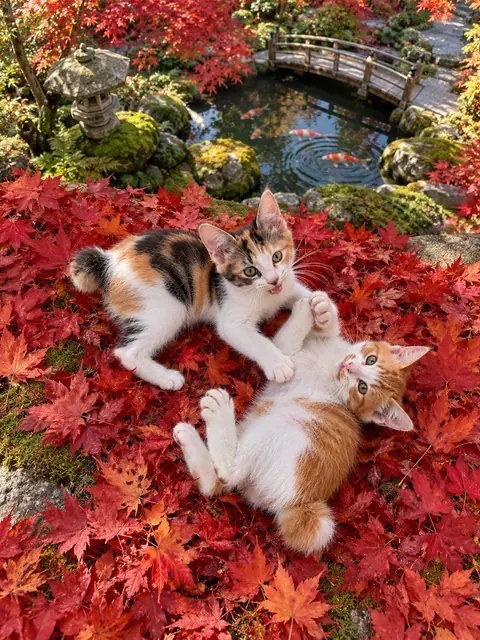
The Bobtail is best known in the calico pattern, called mi-ke in Japan, meaning three fur, with white, black and red. A calico Bobtail is said to bring good luck, and the pattern is so loved that it is the most famous, though the breed comes in many colors and patterns.
The look is slim and elegant. A Japanese Bobtail has a long, lithe body, with the hind legs longer than the front and bent at rest, a high-cheekboned triangular face, large upright ears and oval eyes. The coat is silky and comes in short and long versions.
The personality is talkative and sociable. Bobtails are famous for their voices, which are soft and musical, and they often seem to sing. They are active, intelligent and curious, and they like to carry toys, play fetch and meet visitors at the door. They get on with children and other pets.
Care is easy. A weekly comb is enough for either coat. The breed is generally healthy and long-lived, with few known genetic issues. Many Bobtails like water and will play in a sink, and many love to travel. Give it company and conversation, and it will repay you in luck.
 SundayOct 24
 MondayOct 25
 TuesdayOct 26
 WednesdayOct 27
 ThursdayOct 28
 FridayOct 29
 SaturdayOct 30
 Last WalkWeek close