
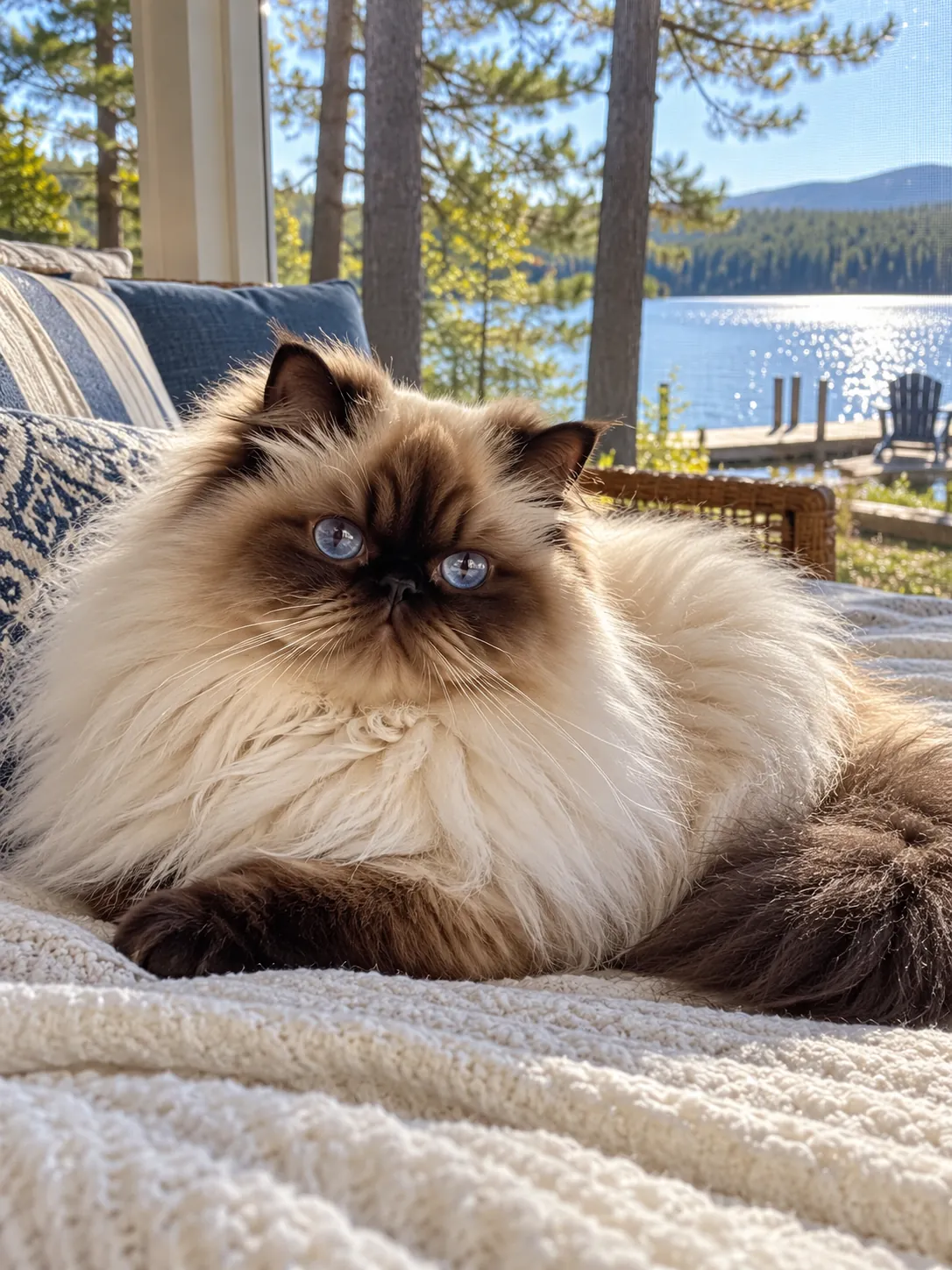
The Himalayan is a Persian wearing a Siamese pattern. In the 1930s, researchers at Harvard, including Clyde Keeler and Virginia Cobb, crossed Persians with Siamese to study how coat color is inherited. Breeders then took up the idea and shaped a longhaired colorpoint cat with the build of a Persian and the points of a Siamese.
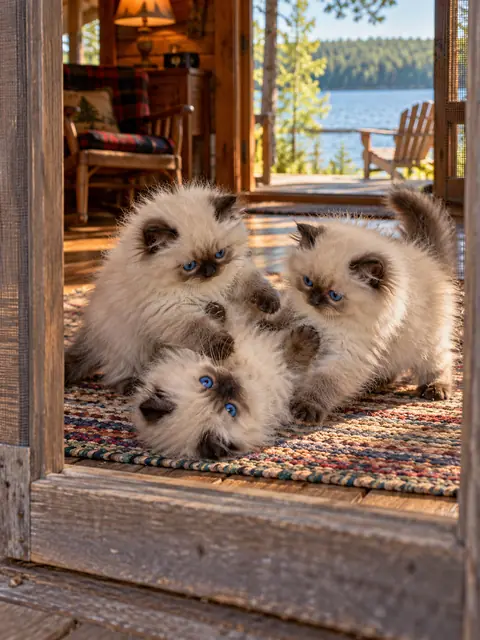
The name comes from the Himalayan rabbit, which has the same dark ears, nose, feet and tail on a pale body. The color is caused by a gene that is sensitive to temperature, so only the cooler points darken. Himalayan kittens are born nearly white and the points develop over the first weeks.
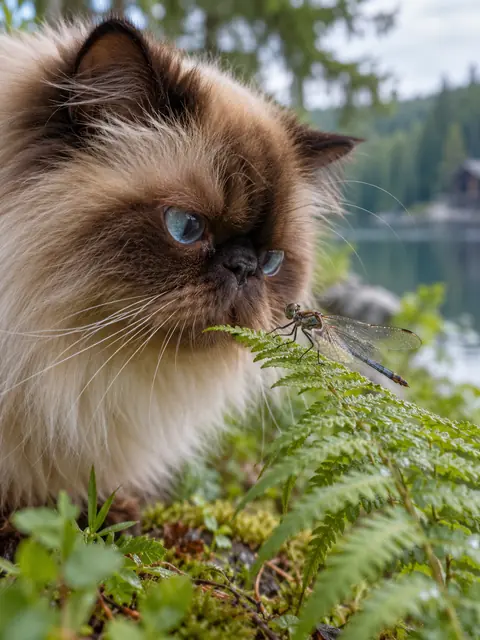
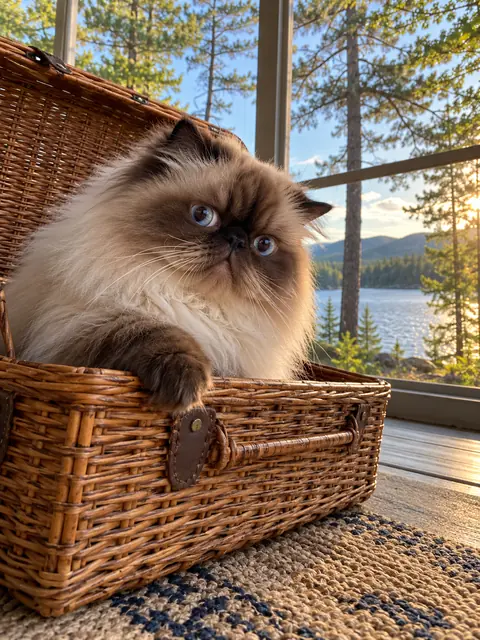
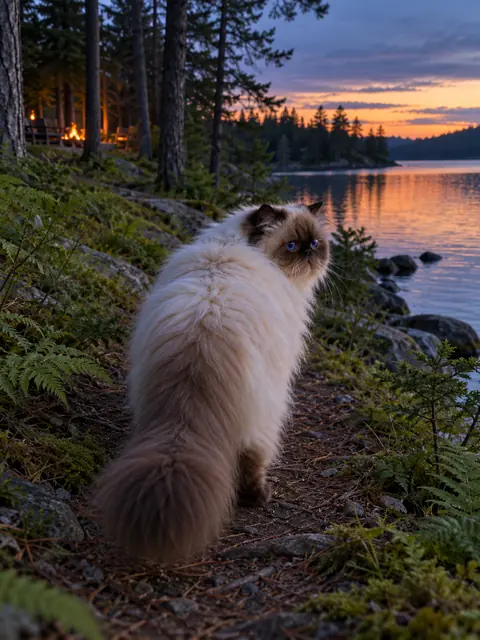
The look is a luxurious one. The coat is long, thick and silky, with a full ruff and a plumed tail. The face is broad and round, with big blue eyes, small ears and a short nose. Points come in seal, blue, chocolate, lilac, red, cream and tortoiseshell, and in tabby patterns as well.
The personality is the Persian’s. Himalayans are sweet, calm and affectionate, with a quiet voice and a talent for lounging. They are less athletic than their Siamese ancestors and prefer a lap, a windowsill and a peaceful household. A little play with a feather toy is usually enough.
The coat needs daily attention. A Himalayan should be combed every day, with regular bathing to keep the coat clean and the face wiped to prevent tear stains. Many owners have the coat clipped short for the warm months. It is a breed for people who enjoy grooming as a ritual.
Many registries show the Himalayan as a colorpoint division of the Persian, and the health notes are the same. Ask breeders about the PKD DNA test, the eyes and the breathing. A well-kept Himalayan can live well into its teens. Keep it indoors, cool in summer and well combed.
 SundayJun 20
 MondayJun 21
 TuesdayJun 22
 WednesdayJun 23
 ThursdayJun 24
 FridayJun 25
 SaturdayJun 26
 Last WalkWeek close