
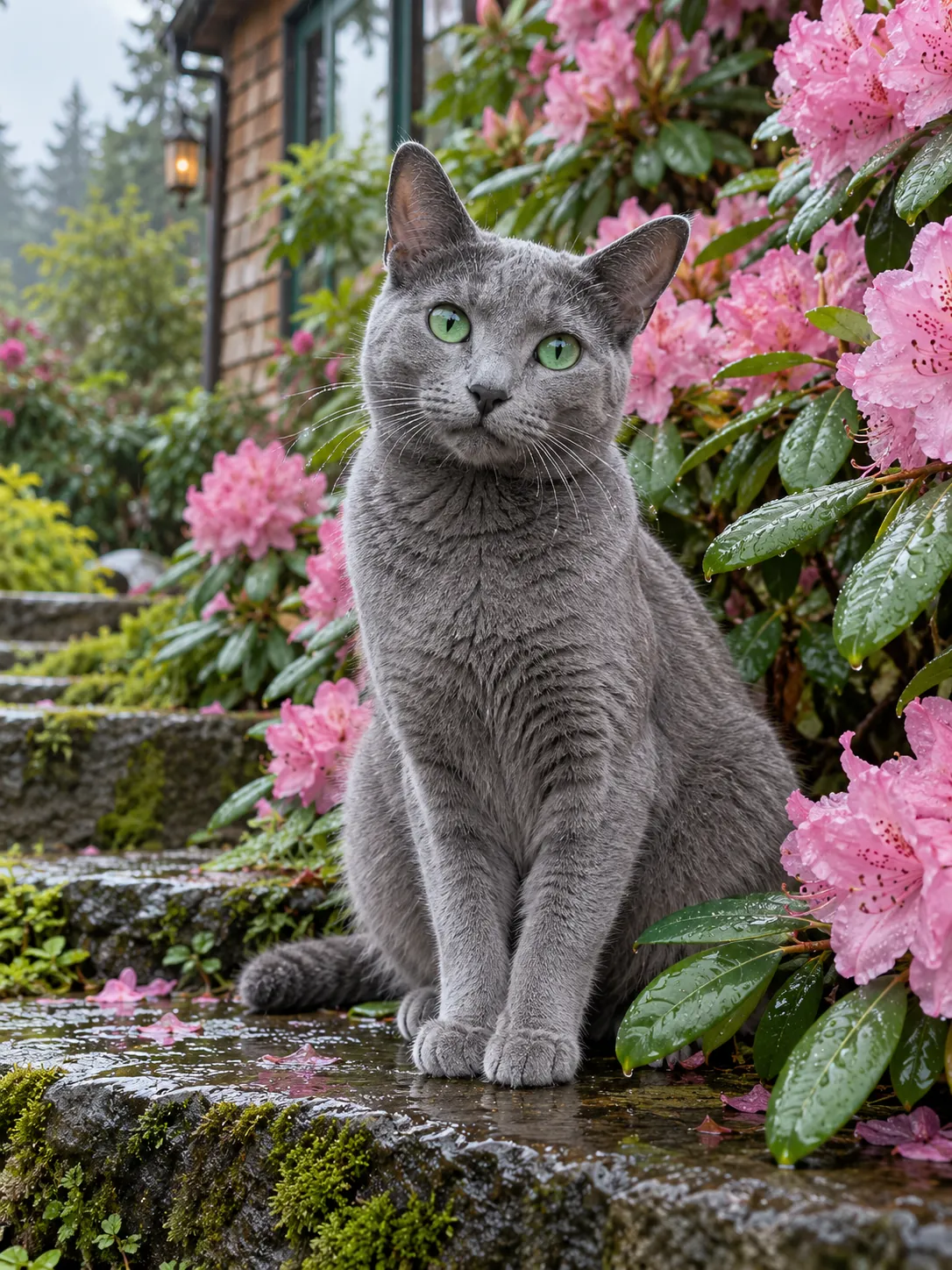
The Russian Blue is a breed with a northern legend. Its story begins in the port of Arkhangelsk, in the far north of Russia, where blue-gray cats were said to have lived near the White Sea. Sailors are supposed to have carried them to Britain and northern Europe in the 1860s, and they were soon shown in English cat shows.
The look is a study in one color. The short, dense double coat is a clear silvery blue, and each hair is tipped in silver, which gives the cat a shimmer as it moves. The coat stands out from the body like plush velvet, and a stroke leaves a mark that smooths out again.
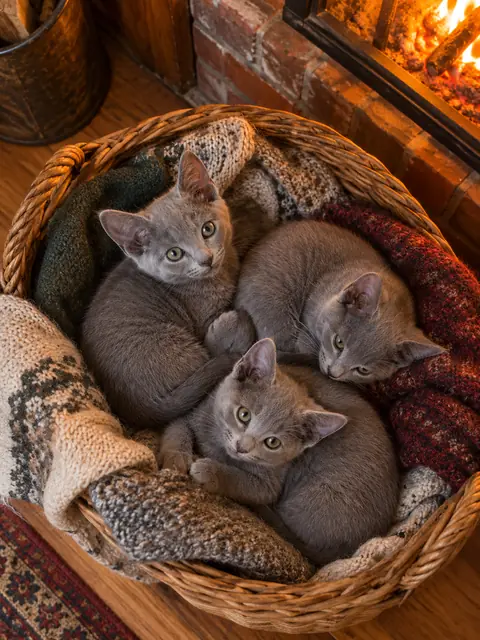
The eyes are the second signature. Kittens start with yellow eyes, which deepen to a vivid emerald green as the cat matures. Combined with the wedge-shaped head, the long neck and the slightly upturned mouth, they give the breed its sweet expression, often called the Russian smile.
The breed was nearly lost in the Second World War and was rebuilt in Britain and Scandinavia, with later infusions from Siamese lines. The modern Russian Blue is a blend of those traditions, and America developed its own look, with a slightly softer face and a deeper green eye.
The personality is gentle and a little shy. A Russian Blue bonds deeply with its family and may hide from strangers, then emerge when the house is quiet. It likes routine, plays gently and is known for a soft, quiet voice. It will often greet you at the door and then follow you around the house.
The coat is easy, a weekly brush is plenty. Some owners say the breed causes fewer allergy problems, but no cat is truly allergen free. The Russian Blue is generally healthy and long-lived, but it loves its food, so watch the waistline. Give it a window, a routine and a calm home.
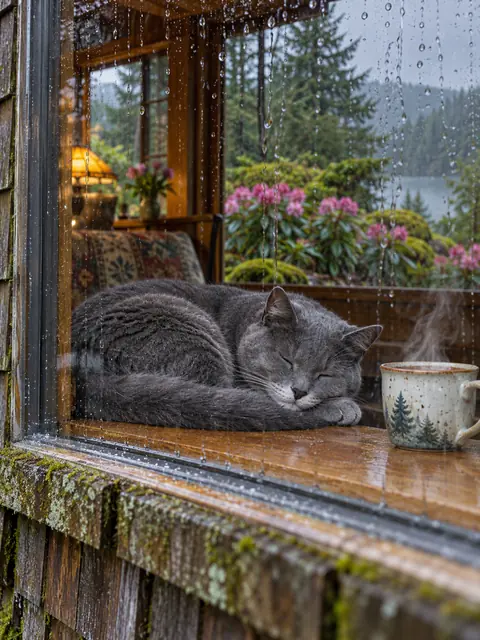 SundayApr 18
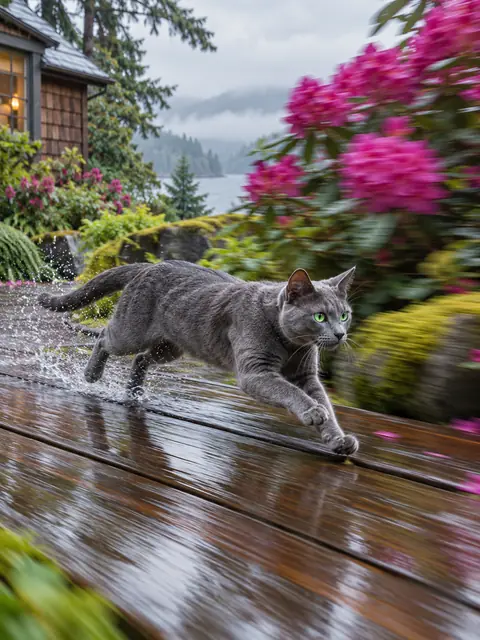 MondayApr 19
 TuesdayApr 20
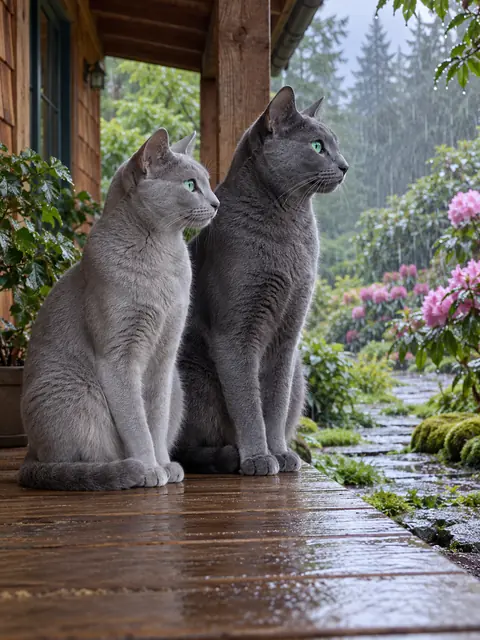 WednesdayApr 21
 ThursdayApr 22
 FridayApr 23
 SaturdayApr 24
 Last WalkWeek close