
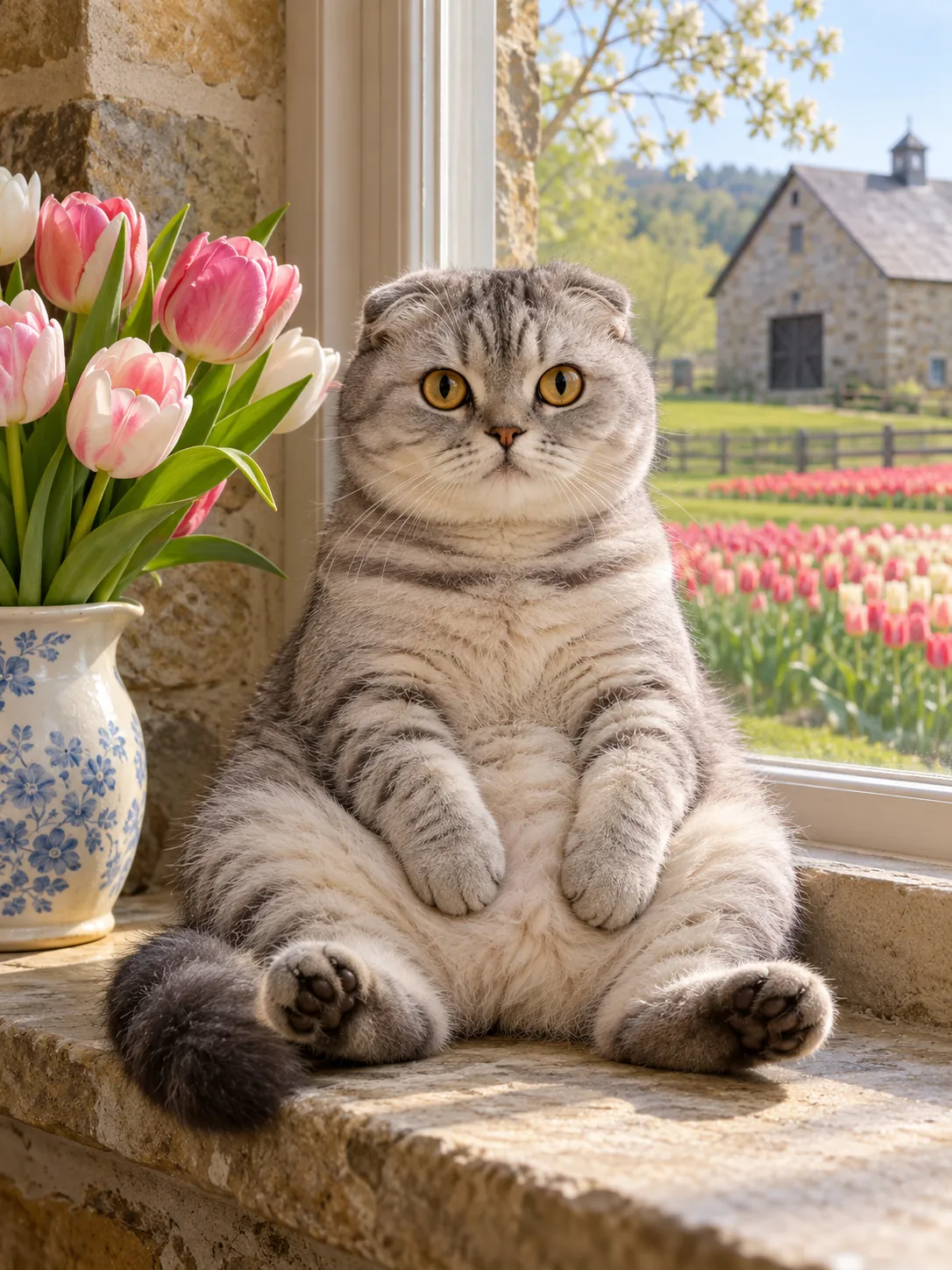
The Scottish Fold began in 1961 on a farm in Perthshire, Scotland, where a shepherd named William Ross noticed a white barn cat named Susie with unusual ears. They folded forward and down, giving her a round, owl-like face. Ross obtained one of her kittens, and a breed was born.
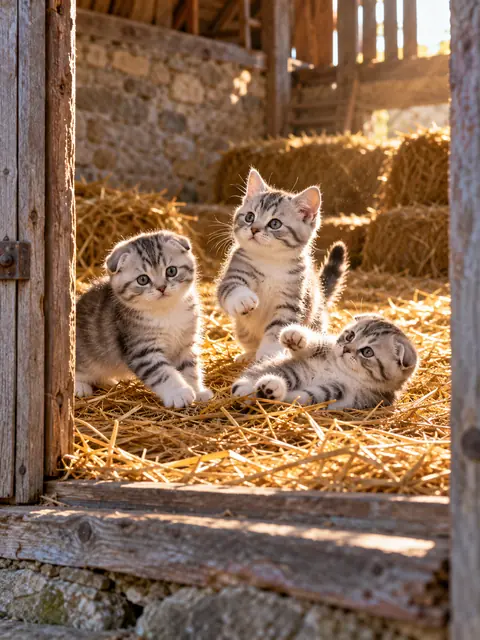
The ears come from a natural mutation that affects cartilage. Kittens are born with straight ears, and the fold appears around three to four weeks. Not all Folds develop the fold, and the straight-eared kittens are an important part of every responsible breeding program.
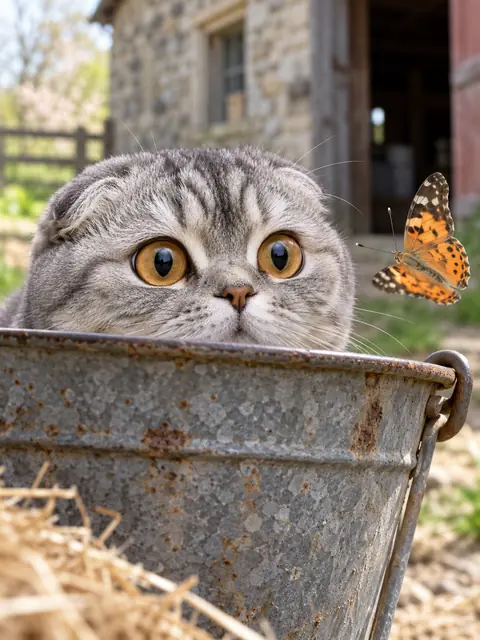
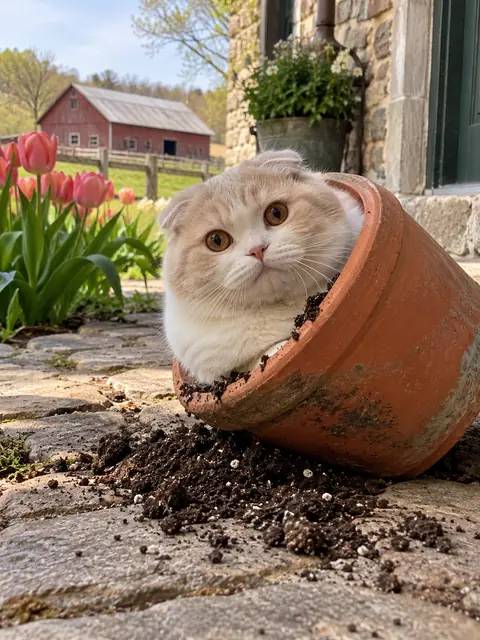
The look is rounded and sweet: a round head, large round eyes, a short nose and small ears tucked forward, and a plush, dense coat in many colors. There are also longhaired Folds, called Highland Folds in some registries, with a soft, flowing coat.
The personality matches the face. Scottish Folds are gentle, adaptable and devoted. They like to be near their people and often sit upright in an amusing pose, which owners call the Buddha position. They are quiet, with a soft voice, and they get on well with children and other pets.
The same gene that folds the ears affects cartilage elsewhere in the body, and this is the breed’s great ethical question. Folds bred to Folds can suffer painful joint disease. That is why responsible breeders always pair a Fold with a straight-eared cat, and why several registries do not recognize the breed at all.
If you love a Fold, choose a breeder who health-tests and breeds only Fold to straight-ear. Keep the cat lean, give it soft places to sleep and clean the ears gently, as the fold can trap wax. Ask a vet about joint comfort, because a Fold may need a bit of extra care as it ages.
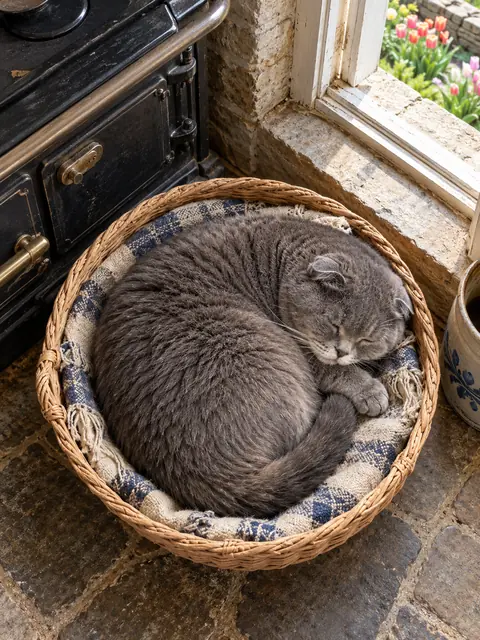 SundayApr 11
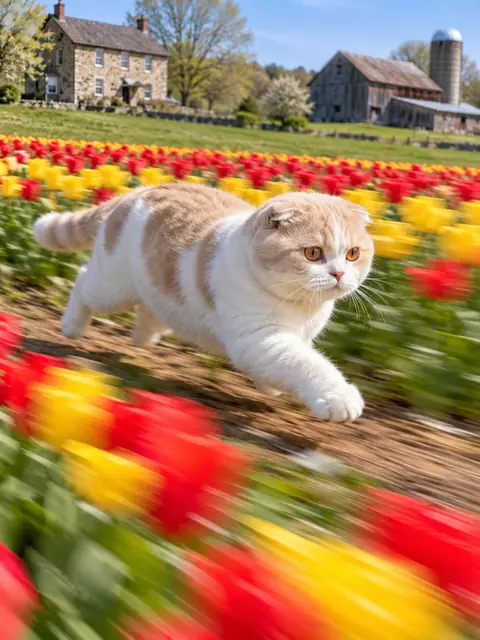 MondayApr 12
 TuesdayApr 13
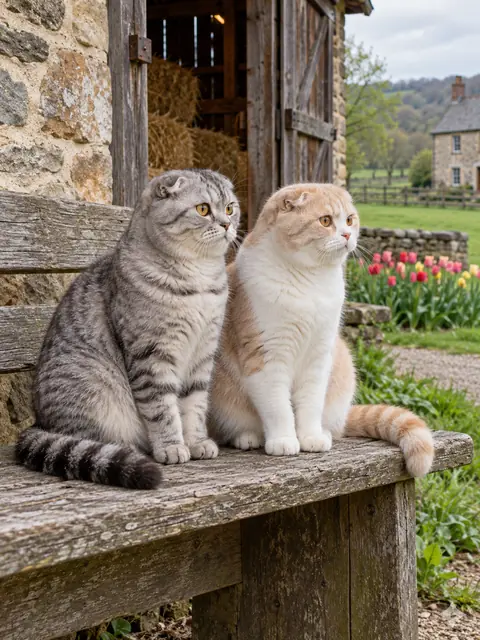 WednesdayApr 14
 ThursdayApr 15
 FridayApr 16
 SaturdayApr 17
 Last WalkWeek close