
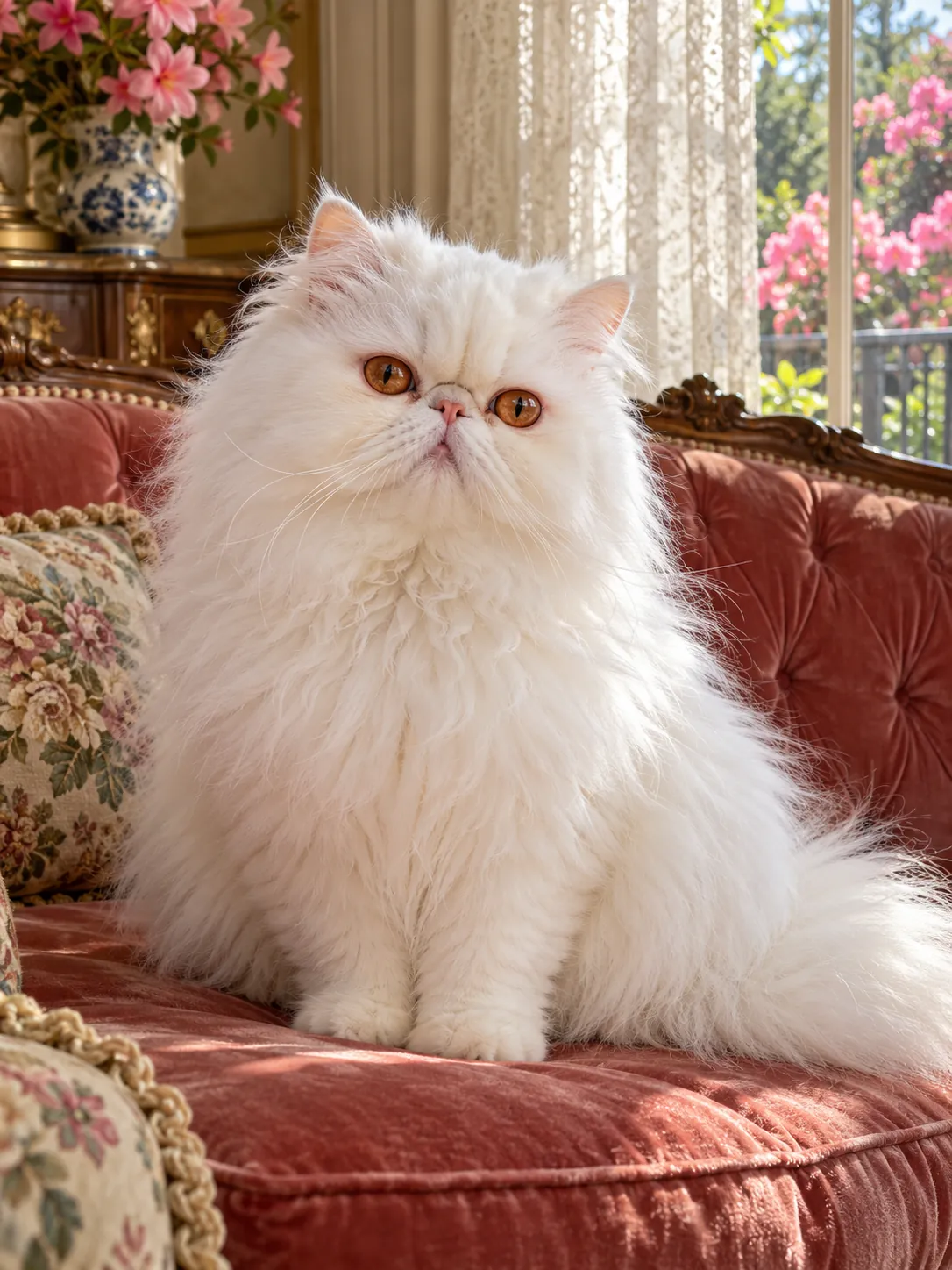
The Persian is one of the oldest and most recognizable of all cat breeds. Longhaired cats from the region once called Persia reached Europe in the 1600s, and they caused a sensation among the nobility for their long silky coats and calm dignity.
Queen Victoria kept Persians, and when the first organized cat show was held at the Crystal Palace in London in 1871, longhaired cats were among the stars. From there the breed spread through Britain and America, and for much of the twentieth century it was the most popular pedigreed cat in the world.
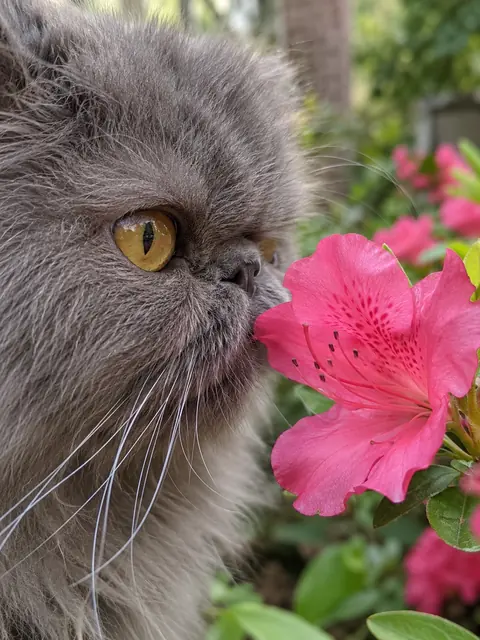
The look has changed over time. The early Persian had a longer nose, while the modern show type has a short, flat face with large round eyes, a sweet expression and a dense, flowing coat in almost every color. A more moderate, traditional type is still bred by those who prefer a more open face.
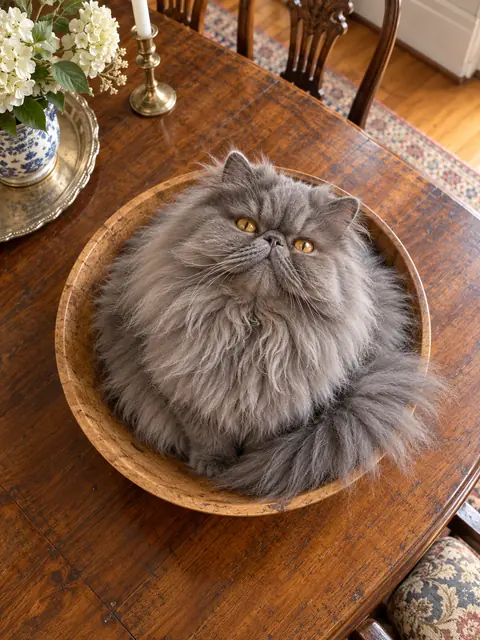
The coat is a luxury and a commitment. It needs daily combing to prevent mats, regular bathing and attention to the eyes, which can tear. Many Persians live happily with a professional groomer on call, and many owners keep the coat short for easy care.
The personality is quiet and sweet. Persians are calm, gentle and unhurried, content to sit in the best spot in the house and be admired. They are not climbers or acrobats. They suit a peaceful home, and they like a routine and a lap.
The flat face brings health needs. Responsible breeders screen for polycystic kidney disease, PKD, with a DNA test, and for eye and breathing problems. A well-bred Persian can live fifteen years or more. Keep the eyes clean, the coat combed and the cat at a healthy weight.
 SundayApr 4
 MondayApr 5
 TuesdayApr 6
 WednesdayApr 7
 ThursdayApr 8
 FridayApr 9
 SaturdayApr 10
 Last WalkWeek close