
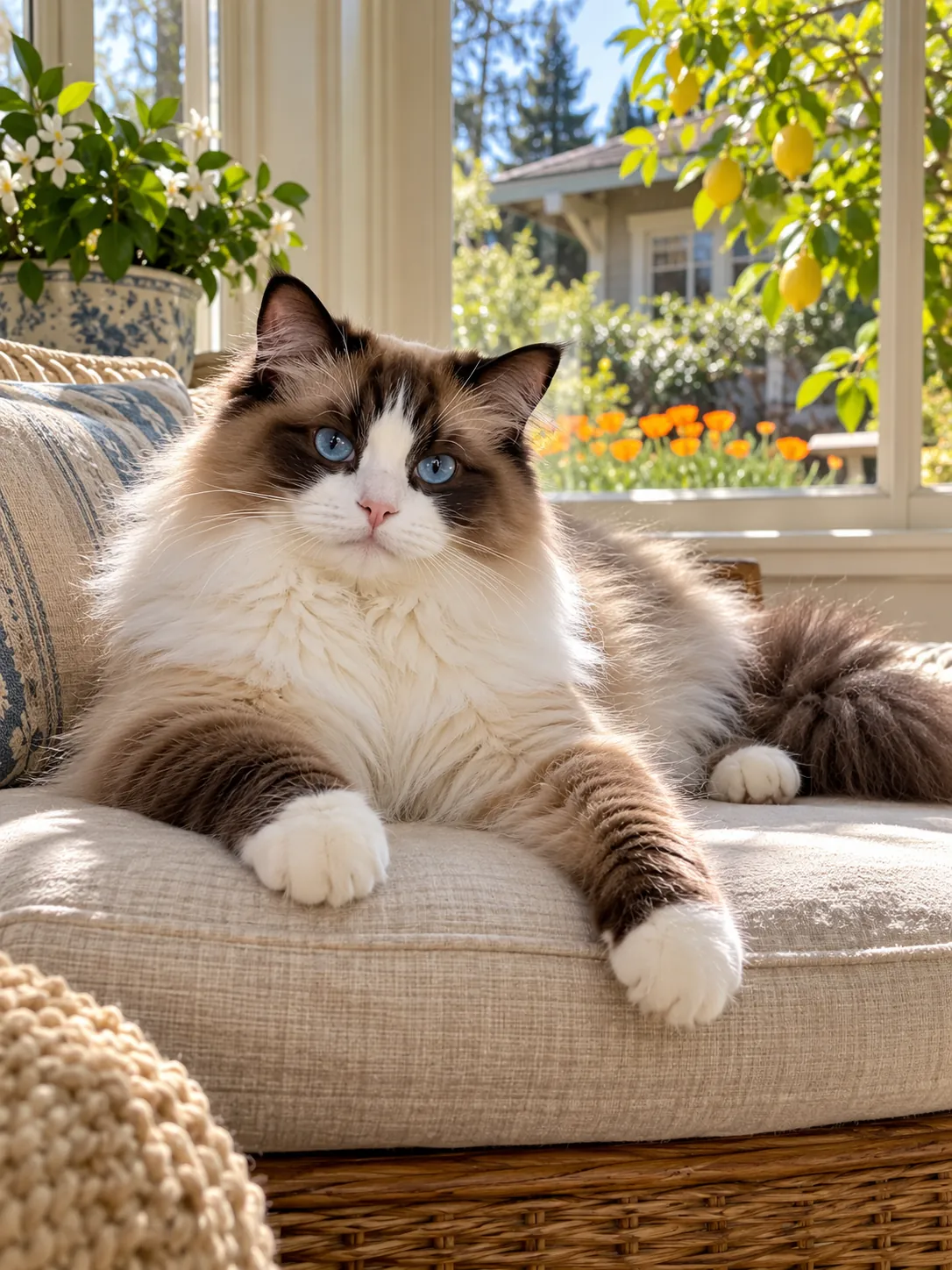
The Ragdoll began in Riverside, California, in the 1960s, when a breeder named Ann Baker developed a line from a white longhaired cat named Josephine and several of her kittens. The goal was a large, gentle, affectionate cat with striking blue eyes and a coat like silk.
The name is the legend. Ragdolls are said to go limp and relaxed when picked up, like a child’s cloth doll. The truth is a little more modest, but the relaxed, trusting nature is real, and a Ragdoll in your arms is usually a calm, heavy, purring weight.
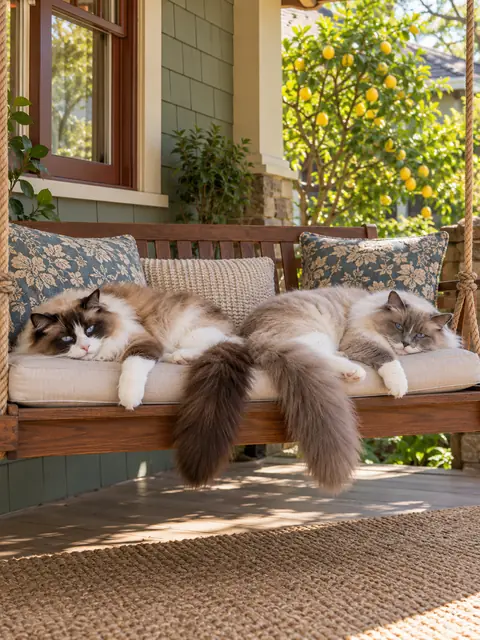
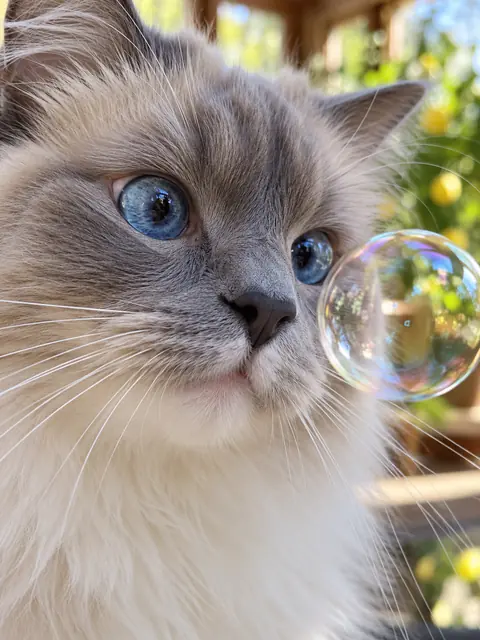
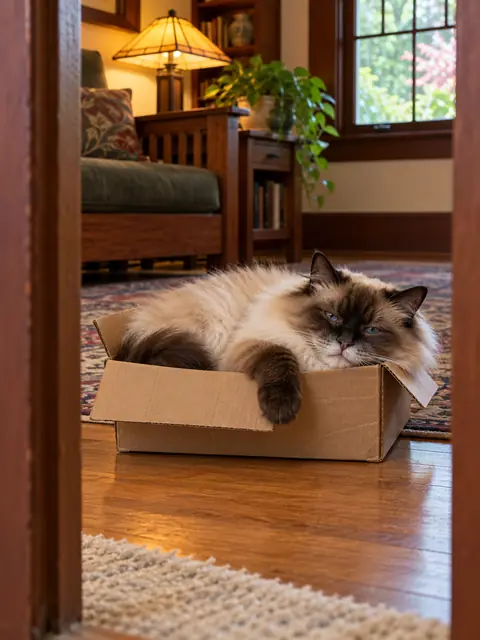
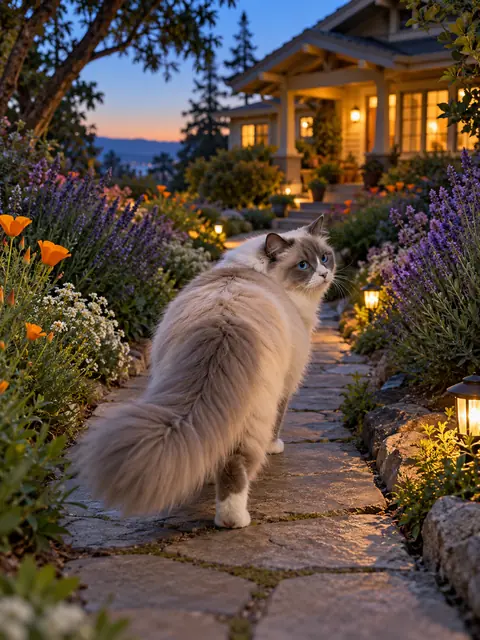
The look is unmistakable. A Ragdoll has a semi-long, silky coat that mats less than most longhaired cats, a plumed tail, and deep blue eyes. The pattern comes in three styles: colorpoint with a pale body and dark points, mitted with white paws and chin, and bicolor with an inverted white V on the face.
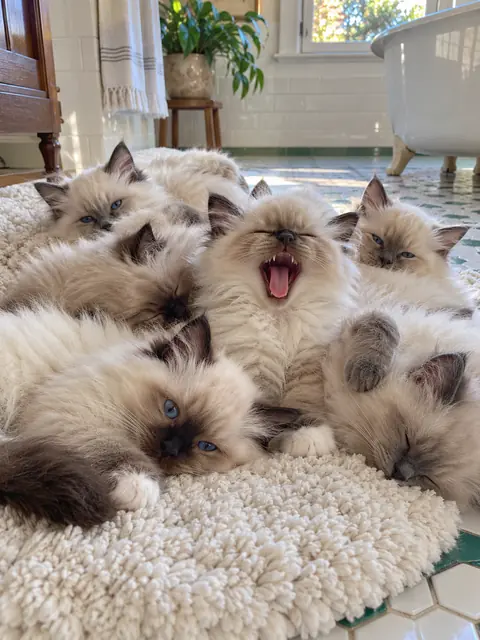
Kittens are born white and the color develops over the first two years. A Ragdoll is slow to reach adulthood, taking three to four years to reach full size and coat, so what you bring home as a kitten keeps getting bigger and more beautiful for a long while.
The temperament is the point. Ragdolls are placid, sociable and people-focused. Many greet their owners at the door, follow them from room to room and settle into a lap at every opportunity. They are not loud and not demanding, and many get on well with children and other pets.
The coat is easier than it looks. A weekly comb keeps it smooth, and more often through the spring shed. Because they are so trusting, Ragdolls are best kept indoors. Responsible breeders screen for the heart disease HCM, using the known Ragdoll gene test, and for kidney and urinary health.
 SundayMar 28
 MondayMar 29
 TuesdayMar 30
 WednesdayMar 31
 ThursdayApr 1
 FridayApr 2
 SaturdayApr 3
 Last WalkWeek close