
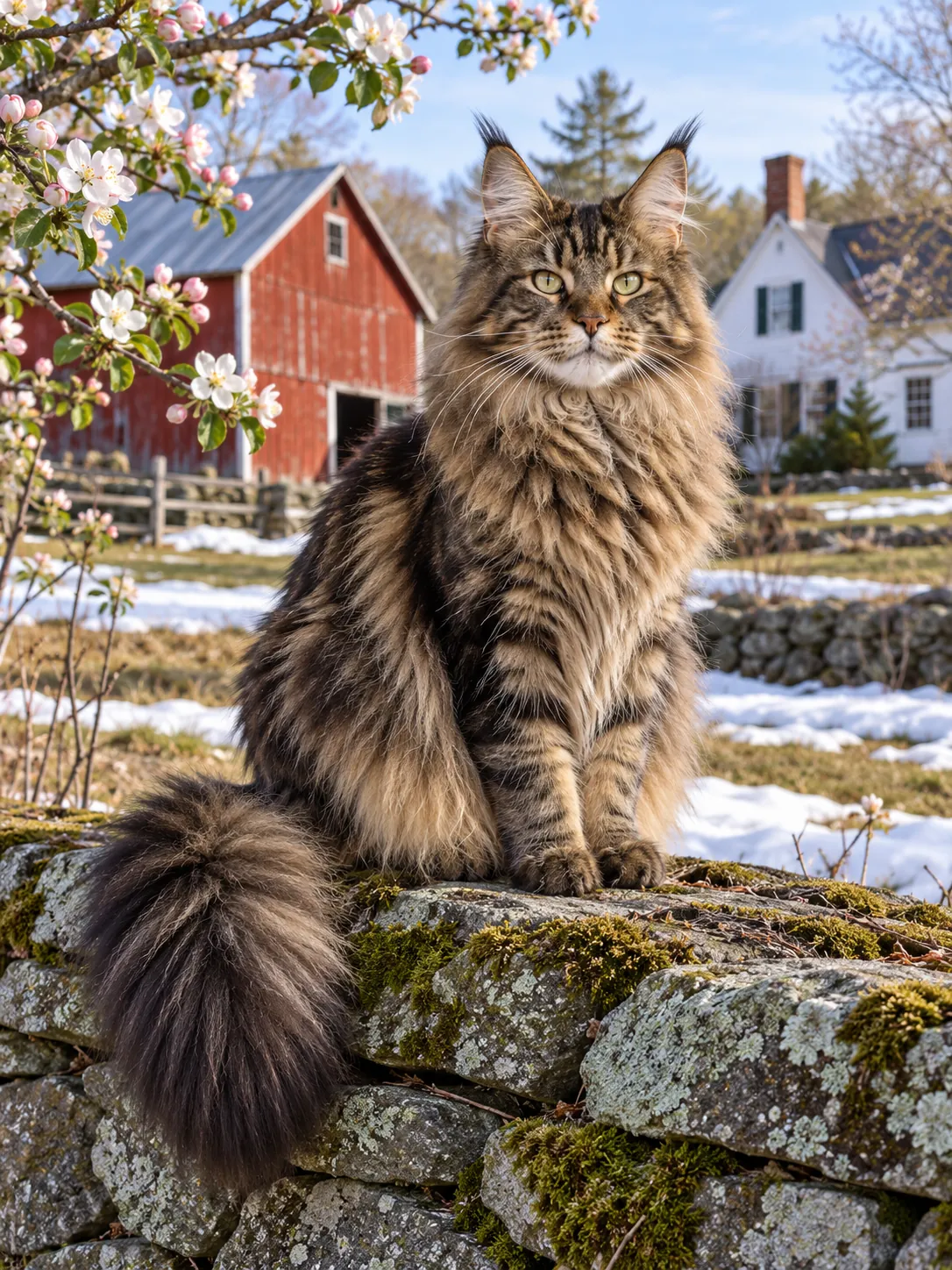
The Maine Coon is the largest of the domestic cat breeds and the oldest natural breed in North America. Nobody knows exactly how it began. Legends credit seafaring cats, Vikings and even Marie Antoinette, but the likeliest story is plain and local: sturdy farm and ship cats that adapted to long New England winters and were then shaped by generations of barn and dockside life.
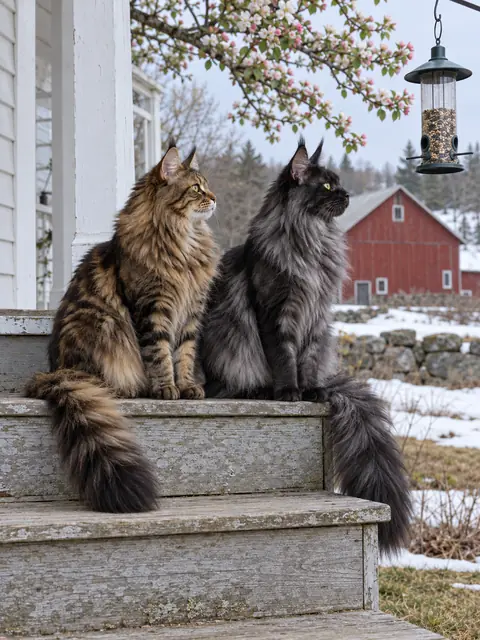
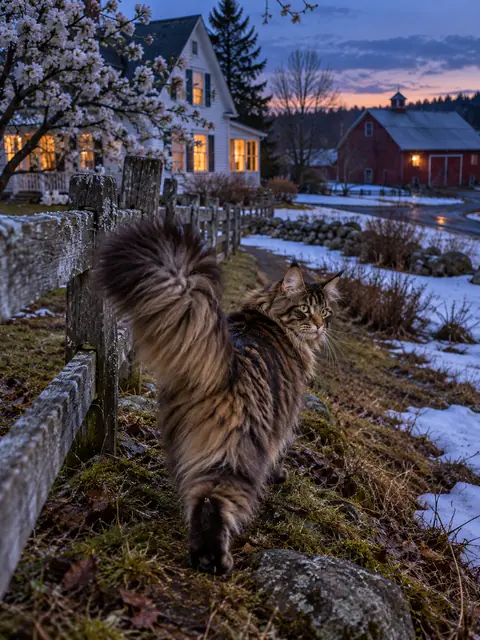
The name comes from a tall tale. The brown tabby with its ringed, bushy tail was said to be the child of a cat and a raccoon. Biology says no, but the name stuck, and so did the look. The shaggy ruff, tufted ears, lynx-tipped points and long plume of a tail all point to a cat built for snow.
The coat is the engineering. It is water-resistant and heavier at the ruff, belly and britches, but silky and light across the shoulders so it never mats easily. The big, wide paws are furred between the toes like snowshoes, and the tail can be wrapped around the nose in a freezing wind.
A Maine Coon named Cosey is remembered as best cat at the 1895 Madison Square Garden show, and the breed was a star of early American cat fancy. Then the glamorous imported longhairs took over, and the Maine Coon nearly faded. Dedicated breeders brought it back, and Maine named it the official state cat in 1985.
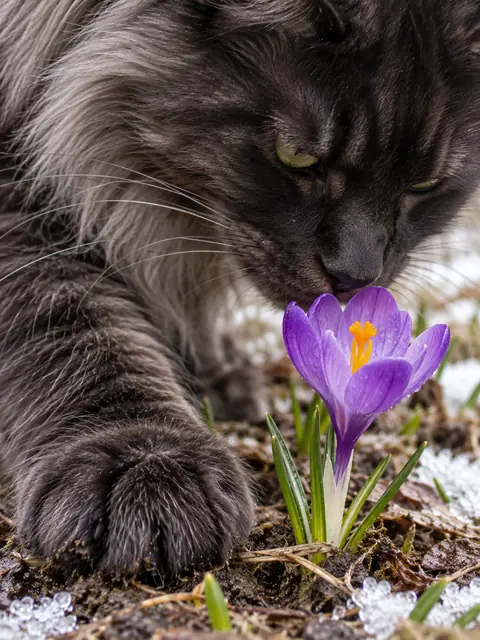
The personality is the surprise. For a cat of this size the voice is small, a chirp or trill instead of a meow. Maine Coons are sociable and patient, and they follow their people from room to room like a large shaggy dog. Many carry a paw to the water bowl and are fascinated by running taps.
Give a Maine Coon room, sturdy furniture and time. It matures slowly, often reaching full size at three or four years. A weekly comb keeps the coat in order. Responsible breeders screen for the heart condition HCM, the spinal disease SMA and hip dysplasia, all of which can run in the line.
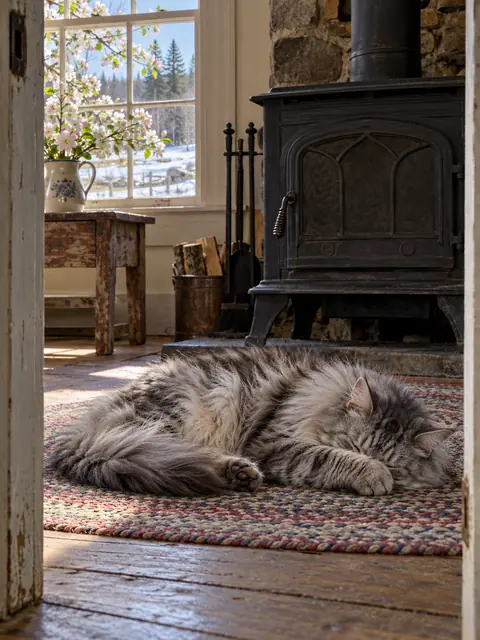 SundayMar 21
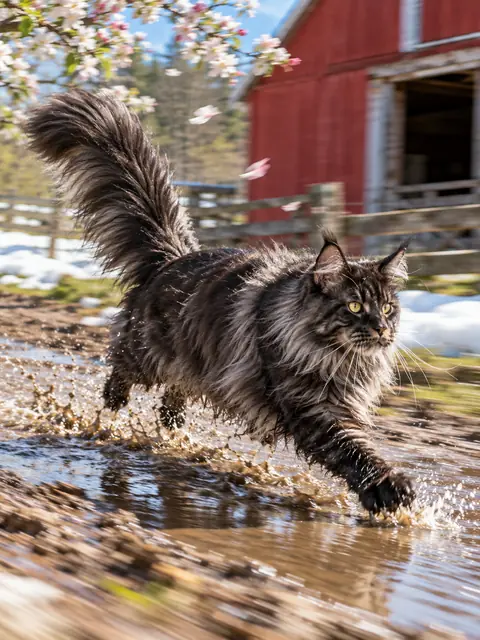 MondayMar 22
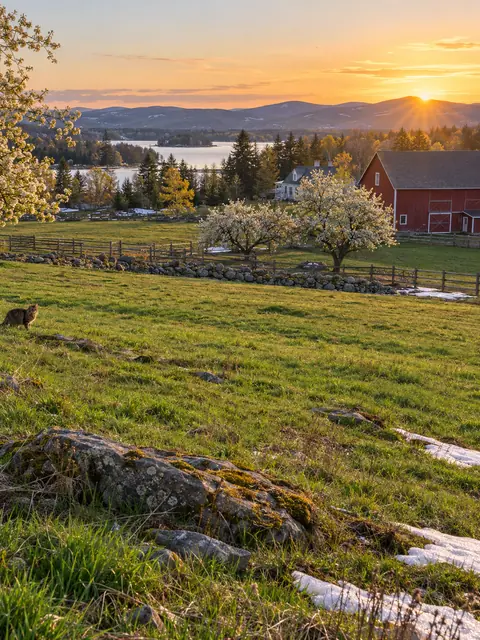 TuesdayMar 23
 WednesdayMar 24
 ThursdayMar 25
 FridayMar 26
 SaturdayMar 27
 Last WalkWeek close